Preschool · 18 months to 6 years
Ready for the primary years, and still asking questions.
Most parents arrive with the same two worries. Push too hard and a child learns to read but stops wanting to. Push too little and you hand a nervous five-year-old to primary school.
Your child gets structured phonics and maths every morning, and an Individual Learning Plan their teacher reviews every six weeks.
ECDA-licensed kindergarten · 4.9★ from 139 Google reviews
Read Write Inc phonics · Singapore Maths · an Individual Learning Plan for every child
A free discovery visit. Fragrance Empire Building, beside ARC.

The learning cycle
Explore, reflect, extend, apply.
Four steps that run in every lesson, in every subject. Here is what each one looks like in a Preschool classroom.
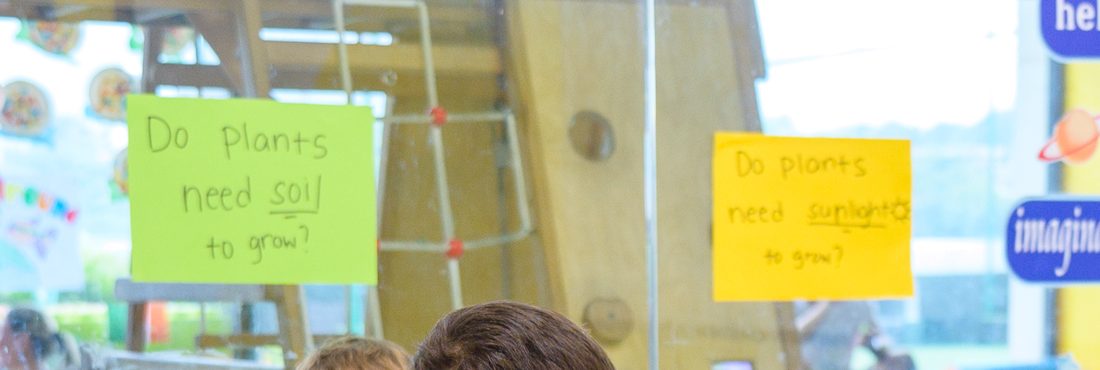
A question first, then everyone has a go
A teacher sketches three shapes on the easel and asks what they notice, before any explanation. The children around her are different ages on purpose: whoever's ready to answer does, and whoever isn't yet gets to watch a friend try.
The shapes aren't really the point. It's finding out, in the first two minutes, who's ready to run with an idea and who needs it slower.
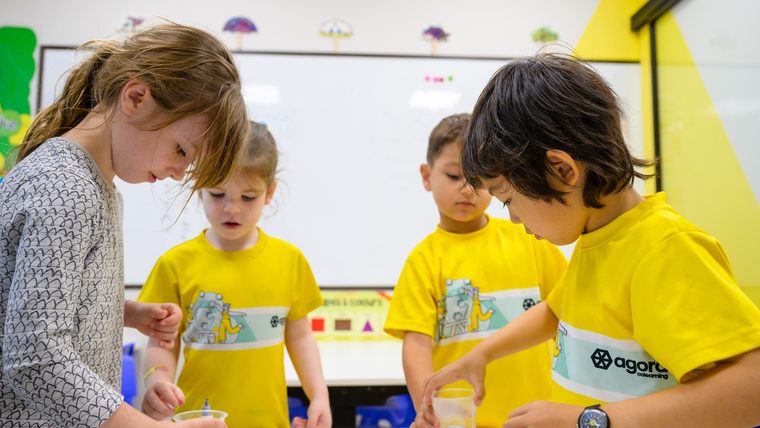
Then they check it against a friend
Before anyone marks anything, two children put their heads together over what they just made and talk it through: what worked, what they'd change, whether their friend saw it the same way.
Self and peer assessment, out loud, in their own words, while the attempt is still fresh enough to matter.
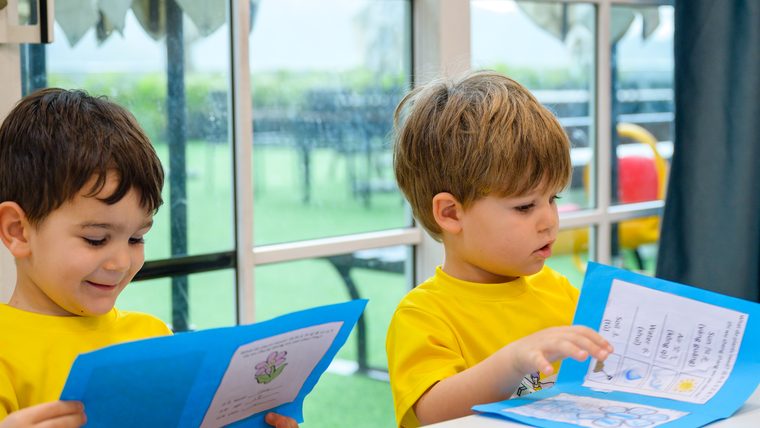
Then they go back and try it harder
Round two isn't the same task again. Some children get pushed further into it; others get a hand to hold, so they reach the same point safely. Children who've got it go further, and nobody is held back to repeat it.
Then they reflect a second time. Understanding what they did matters as much as doing it.
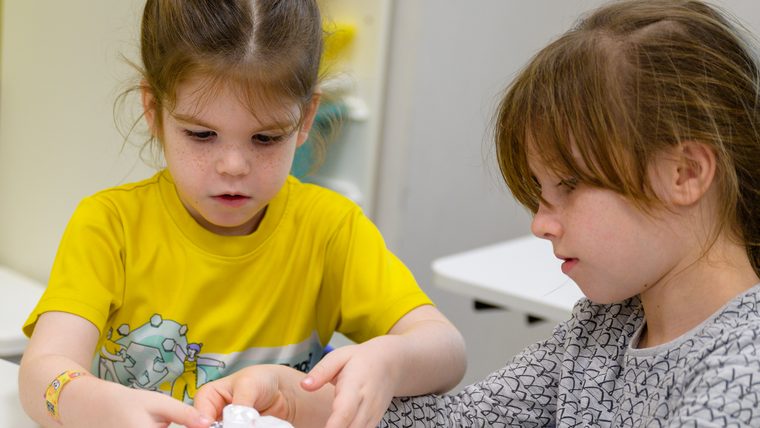
And it ends with something to show for it
The lesson closes with the idea put to use on something real, with their name on it, not a worksheet, and a teacher's own assessment alongside it.
Four steps, every subject, every week. To the child, it just feels like being noticed.
The same cycle runs in Playschool and Student Care too. Read the cycle in full
A day with us
Structured, and led by the children.
The day has a deliberate shape. What happens inside each block follows the children.
Core curriculum
- Morning circle
- Phonics, literacy, numeracy
- STEAM, performing arts, sports
Inquiry
- Clay, recycling, robotics
- Mandarin through the day
- Outdoor exploration
Extensions
- Weekly projects
- Focused learning, linked to each child’s plan
We'll walk you through a typical day when you visit.
The academic side, in plain terms
What your child will be taught.
Reading
Read Write Inc phonics, taught in sequence, so decoding builds properly. Children read real books early because they can.
Maths
Singapore Maths, moving from concrete to pictorial to abstract. Children hold the quantity before they draw it, and draw it before they write the numeral.
Mandarin
Mandarin runs through the day. Our Mandarin-speaking teachers use it with the children in play and in activity, so they hear it and use it constantly.
That's daily exposure and use, rather than full bilingual immersion.
Developmental domains
Every child has an Individual Learning Plan covering six developmental domains, built from what a teacher watched them do and wrote down. Their teacher reviews and updates it every six weeks.
What's measured is what they can do this term against last term.
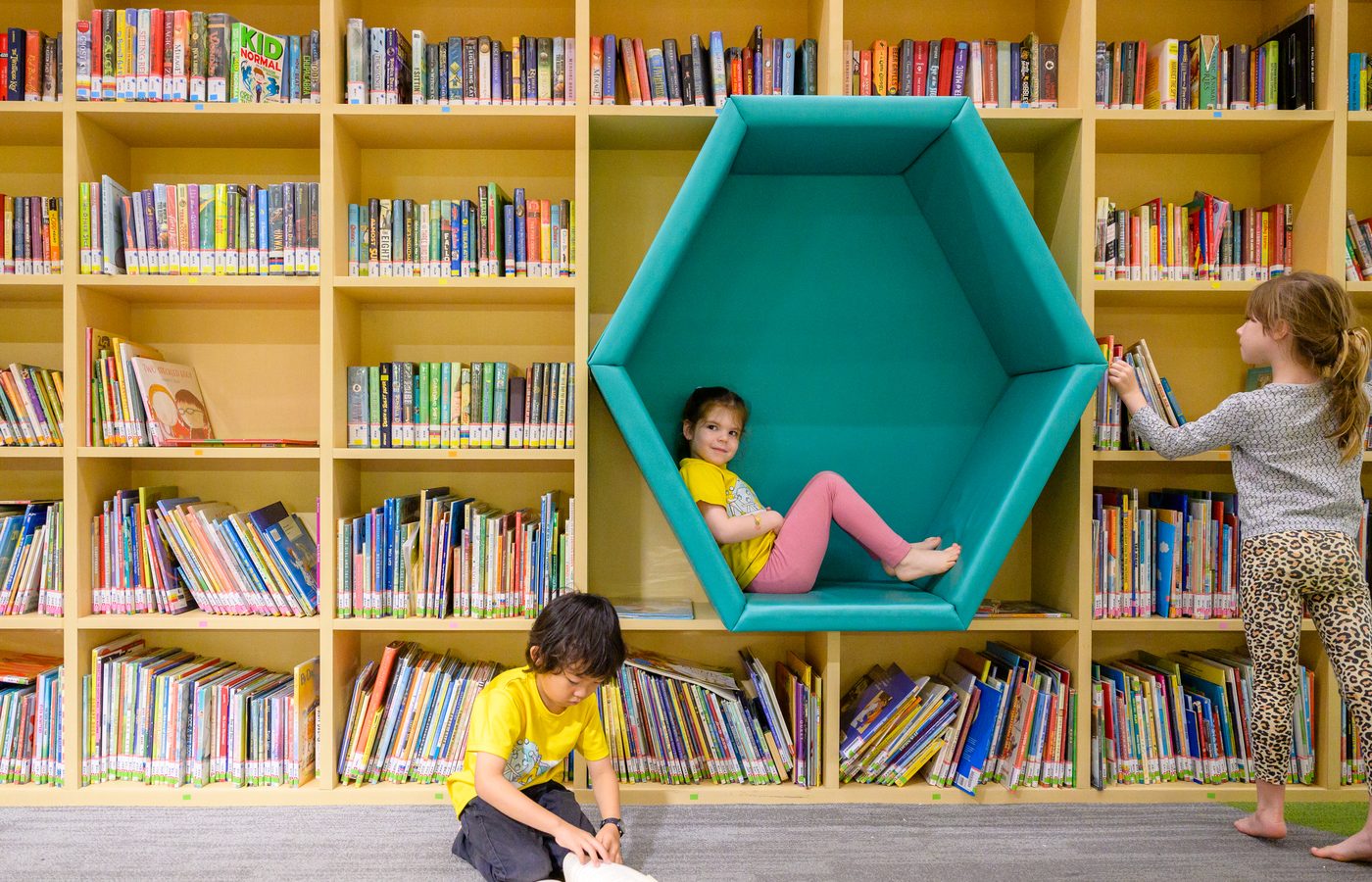
Why the room looks like this
A room built for staying in.
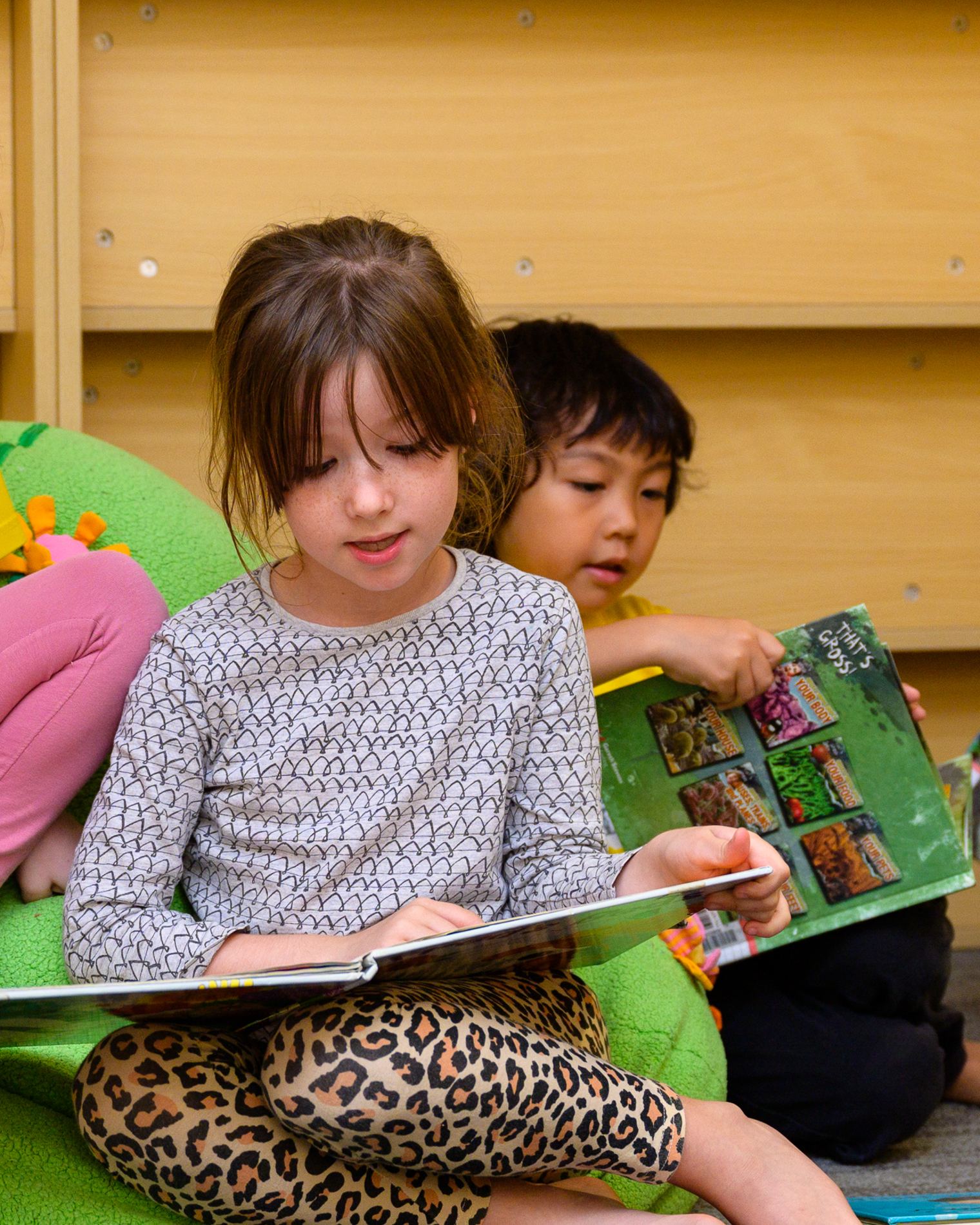
Children read for longer when the place they're reading is worth sitting in. So the books a child reads sit low enough to reach without asking, and the nook is built for one.
The same thinking shapes the shelves in every other room. A child who has to ask a teacher to reach a book will ask twice, then stop asking.
What families tell us
What parents mention first.
Unlike many other preschools that can feel like a ‘revolving door’ … Claire and her team gave my son as much time as he needed to feel safe and confident. They met him where he was emotionally, and that made all the difference.
I have looked for a preschool that actively cares and listens to the child, never leaves a crying child assuming they’ll ‘just be ok’ … Agora is the place.
She went above and beyond by inviting me to spend a full normal school day with my daughter, allowing us to get a real feel for the teaching style, environment and teacher-child interactions.
They have taken the time to truly understand his emotional and learning needs, tailoring their approach to ensure he feels safe, valued and capable.
If your child needs extra support
Tell us early, and we'll tell you what we can do.
Children who need extra support are welcome here, and the conversation starts before you enrol.
Our Head of Early Years is an ECDA Inclusion Officer, and she's the person you'd speak to before enrolling. She'll tell you whether this is the right setting for your child, and sometimes the answer is no. If we can, she'll show you what support looks like on an ordinary day. If we can't, she'll tell you why. Better to know that at the start than in month three.
What the Preschool fee includes
What the fee covers, and what's charged separately.
One monthly fee, five days a week, all year round.
In the monthly fee
- Five days a week, all year round. We staff the programme for twelve months, so the monthly fee is simply the annual cost divided by twelve.
- Drop off from 7.30am, pick up by 2pm.
- 2 sets of uniform, grip socks, painting apron, sun hat, water bottle and reading log
- An Individual Learning Plan, written after four to six weeks of watching how your child actually works, and reviewed every six weeks.
- Healthy morning snack and optional lunch
- A daily note from your child's teacher, a fortnightly newsletter, a 6-weekly update against the learning plan and a review with you.
- Insurance.
- No registration, enrolment, admin or deposit charges.
Charged separately
- A longer day, if you'd like one. The afternoon extension adds either two or four hours.
- Transport.
- Re-enrolment, if you withdraw and later come back.
Fees are set each year, so we send the current schedule instead of printing one that dates. Ask, and within 24 hours you'll have the programme fee, extension and transport in writing. Nothing is due at your visit.
You decide afterwards, in your own time.
FAQs
The questions we're asked most.
What ages is Preschool for?
Eighteen months to six years, through to primary school.
Will my child be ready for the primary years?
Readiness here means a child who can decode text, handle numbers confidently, sit with a hard problem, and ask for help when they need it. The last two are the ones that actually decide how the primary years go.
Is this inquiry-based or academic?
Both. Phonics and maths are taught in sequence each morning, and the inquiry work is where children find out what those skills are for.
Is my child safe here?
A Child First Aider is on site whenever we're open, and only the people you've named can collect your child at the end of the day.
What if my child takes a long time to cope?
They can take as long as they need. Some settle in a morning, some take a term. Tell us at the visit and we'll explain exactly how we'd handle it.
What happens if my child’s teacher leaves?
Another teacher does the same thing, because we train the practice rather than rely on personality. New teachers complete the Agora Training Plan before they run a room.
What does Preschool cost?
Fees are set each year, so we don't print a schedule that dates. Ask, and within 24 hours we'll send the programme fee, the afternoon extension and transport in writing. There are no registration, enrolment, admin or deposit charges, and nothing is due at your visit.
Arrange a discovery visit
Come and see a morning. You'll watch a class in progress, meet the teachers who'd have your child, and go through the fees. Fill in the form and we'll call or WhatsApp you within 24 hours. The visit is free, and nothing is due on the day.
Centre address
Fragrance Empire Building, 456 Alexandra Rd, #01-03, Singapore 119962
We only use your details to get back to you. Privacy policy.